WOMEN’S HEALTH
Polycystic Ovary Syndrome (PCOS)
PCOS is a common hormonal condition that can affect periods, ovulation, skin, hair and metabolism. Symptoms can vary significantly from person to person, and treatment can be tailored to your individual symptoms, health and goals.
What is PCOS?
Polycystic ovary syndrome (PCOS) is a hormonal condition that affects how the ovaries function. It is commonly associated with irregular or absent periods, signs of increased androgen activity and changes in ovulation.
PCOS can affect people differently. Some may experience changes in their menstrual cycle, acne or increased hair growth, while others may first become aware of PCOS when investigating difficulties with ovulation or fertility.
PCOS is also associated with metabolic health, including an increased risk of insulin resistance in some patients. This is why assessment and treatment should be individualised rather than based on symptoms alone.
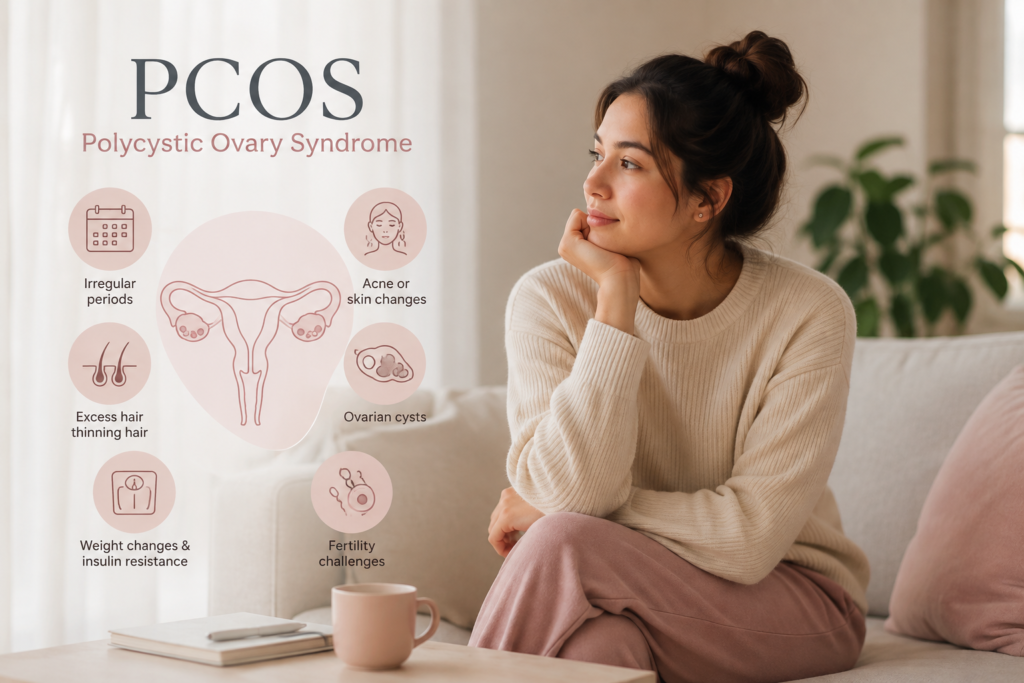
Common Symptoms of PCOS
PCOS can present differently from person to person. Some people experience several symptoms, while others may have only one or two.
Irregular or absent periods
Menstrual cycles may be infrequent, unpredictable or absent.
Acne or oily skin
Higher androgen activity can contribute to persistent acne or changes in the skin.
Excess hair growth
Increased facial or body hair may occur particularly on the face, chest or abdomen.
Hair thinning
Some people with PCOS experience thinning of the hair on the scalp.
Weight & metabolic changes
PCOS may be associated with difficulty managing weight or insulin resistance.
Difficulty with ovulation
Irregular ovulation can sometimes affect fertility.
How is PCOS diagnosed?
PCOS is diagnosed by considering your symptoms, menstrual history and other relevant health information. There is no single test that can diagnose PCOS, so your doctor may recommend a combination of assessments depending on your individual circumstances.
Assessment may include:
– Discussion of your menstrual cycle, symptoms and medical history
– Physical examination when appropriate
– Pelvic ultrasound
– Blood tests to assess relevant hormone levels
– Assessment of metabolic health, such as blood glucose or insulin resistance, when indicated
Not everyone with PCOS requires every test. Your doctor can recommend appropriate investigations based on your symptoms and health history.
Treatment and management of PCOS
Treatment for PCOS depends on your symptoms, overall health and individual goals. There is no single treatment that is right for everyone, so management can be tailored to the areas that are most important to you.
Menstrual & hormonal symptoms
Treatment may help manage irregular periods, acne, excess hair growth and other symptoms associated with hormonal changes.
Metabolic health
Lifestyle measures and, when appropriate, medication may be recommended to support metabolic health and manage insulin resistance.
Ovulation & fertility
For people trying to conceive, treatment may focus on supporting regular ovulation and addressing other factors that may affect fertility.
When should you see a doctor?
Consider speaking with a doctor if you have irregular or absent periods, symptoms such as persistent acne or excess hair growth, concerns about ovulation or fertility, or other changes that may be related to your hormones.
You may also benefit from an assessment if you have already been diagnosed with PCOS and would like support managing your symptoms, menstrual cycle, metabolic health or reproductive goals.
PCOS can affect people differently, so your care should be based on your individual symptoms, health and priorities.
Not sure which service is right for you?
Our team can help guide you to the most appropriate appointment for your needs.
Book an Appointment